When Supplementation Becomes Essential
Written by Ana Vlahovic
The Fragile Beginning: Life in the First Days
The first days of a kitten’s life are quiet, fragile, and decisive. Curled against their mother, newborn kittens rely on her warmth, her presence, and most importantly, her milk. Under ideal circumstances, a mother cat’s milk provides everything a kitten needs during those critical early weeks. It is perfectly designed by nature to nourish, protect, and support healthy development.
When Nature Needs Help
Yet, as every experienced breeder or caregiver knows, nature does not always follow the ideal script.
Sometimes a litter is simply too large for one mother to support. Sometimes exhaustion, stress, or health challenges reduce the quantity or quality of her milk. In other cases, a kitten may be weaker than its siblings and struggle to nurse effectively. When this happens, hand-feeding is not a sign of failure – it is an act of responsibility. Supplementation becomes a conscious decision to step in and give those kittens the support they need to survive and thrive.
More Than Food: The Importance of Warmth
When supplementation becomes necessary, nutrition is only part of the equation. Warmth is equally vital. In their first weeks of life, kittens are unable to regulate their own body temperature. A mother cat naturally provides heat, but in her absence – or when kittens must be separated from their mother for various reasons – it is essential to ensure that the nest remains warm and stable. A nest that is too cold can quickly weaken kittens, while excessive heat is equally dangerous and may lead to dehydration. The optimal nest temperature during this period should be maintained at approximately 24–26°C (75.2–78.8°F), creating a safe environment that supports digestion, circulation, and overall vitality.
Growth as a Guide: Monitoring Weight and Development
One of the clearest ways to understand whether kittens are getting enough nourishment is by watching their growth. A healthy kitten grows quietly and steadily. Daily weight checks, taken at the same time each day with a precise digital scale, tell an honest story. Most healthy kittens gain between 10 and 15 grams per day. When that number stalls – or worse, begins to drop – it is a quiet warning that intervention may be needed. In those moments, timely action can make all the difference.
First Week Feeding: Establishing a Lifeline
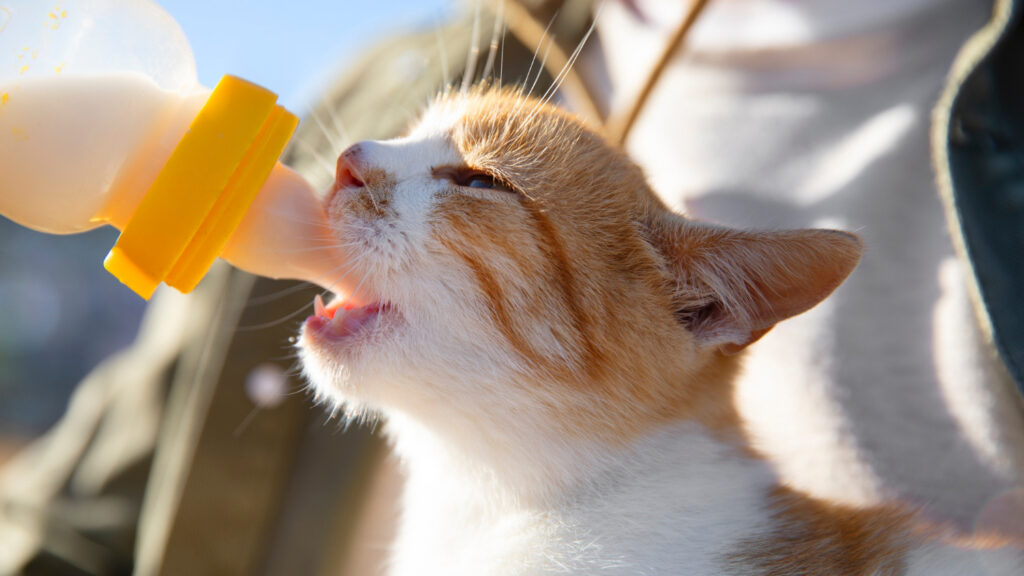
When supplementation is required, kittens must be fed exclusively with a high-quality kitten milk replacer. During the first week of life, this means feeding every three hours, both day and night. Each feeding is small – usually about 2 to 4 milliliters – but consistency is everything. Newborn kittens are entirely dependent on regular intake, and skipped feedings, especially overnight, can quickly weaken even a strong kitten.
Second Week: Growing Strength and Longer Intervals
By the second week, subtle changes begin to appear. Eyes open, movements become stronger, and feeding intervals can be gently extended to about every four hours. At this stage, kittens typically take in 5 to 10 milliliters per feeding, showing more coordination and stamina with each passing day.
Third Week: Preparing for the Transition to Solid Food
The third week marks another important transition. Feedings usually occur every five hours, with volumes increasing to 10 to 15 milliliters per meal. Around this time, kittens are also physiologically ready to begin digesting commercial kitten food, fresh meat, or a combination of both. Soft, mushy meals—introduced slowly alongside milk replacer—help prepare their digestive systems for the next stage of development.
Fourth Week and Beyond: From Dependence to Exploration
By the fourth week of life, kittens become noticeably more active. They explore, play, and show clear curiosity about solid food. Feeding intervals may extend to five or six hours, while milk volumes per feeding often remain similar. What changes is not the milk itself, but its role: it gradually shifts from being the primary source of nutrition to a supportive one, as wet and dry foods, along with fresh meat, become more prominent.
Completing the Mother’s Role: Assisting Elimination
Hand-feeding, however, does not end with the bottle. During the first weeks of life, kittens require assistance with elimination after each feeding – another role that a mother cat would normally fulfill. Using a piece of cotton or gauze moistened with lukewarm water, the genital region should be gently massaged in small circular motions. This stimulation, which typically takes about 30 seconds, encourages urination and defecation and is essential for proper digestion and comfort in the early weeks of life.
The Critical First Immunity: Understanding Colostrum
Throughout all of this, one element deserves special attention – colostrum. In the first 24 hours of life, colostrum provides vital antibodies that help build a kitten’s immune defenses. This window is brief and cannot be fully compensated for later, making early access to colostrum one of the most critical factors in a kitten’s long-term health. When a mother is unable to provide it, specialized products designed for newborn kittens can help bridge this critical gap. These formulas (usually in the form of a paste) contain colostrum along with key nutrients such as vitamin B12, biotin, and folic acid, supporting immune development and proper digestive function during the most vulnerable stage of life.

Because loving your cat means being prepared for the unexpected.
Building the Future: Nutrition After Milk
As kittens grow and transition away from milk, the quality of solid food becomes increasingly important. High-quality commercial kitten food—both wet and dry—or fresh meat, or a combination of both, should be used to support proper growth, bone development, and immune health. Proper nutrition during this stage lays the foundation for lifelong well-being and resilience.
Avoiding Common Hand-Feeding Mistakes
Hand-feeding kittens also requires care and awareness to avoid common mistakes. Cow’s milk or plant-based milk should never be used. Formula must always be warm – not cold – and kittens should be positioned correctly during feeding, never on their backs, to prevent aspiration. Nighttime feedings must not be skipped, and weight records should always be kept. Small oversights can have serious consequences for such tiny lives.
Love in Action: What Supplementation Truly Means
In the end, supplementing kittens is about far more than nutrition. It is about presence. It is about the quiet hours spent feeding, warming, weighing, stimulating, and watching. In those small, careful acts lies security, strength, and the chance for a healthy beginning. It is love made practical – supporting kittens as they grow stronger, more curious, and ready to discover the world waiting just beyond the nest.
Author: Ana Vlahovic
Cat Breeder, Cat Nutritionist, TICA longtime member
Don’t forget to follow us!