Written by Rene Knapp, long time TICA member and dedicated cat lover.
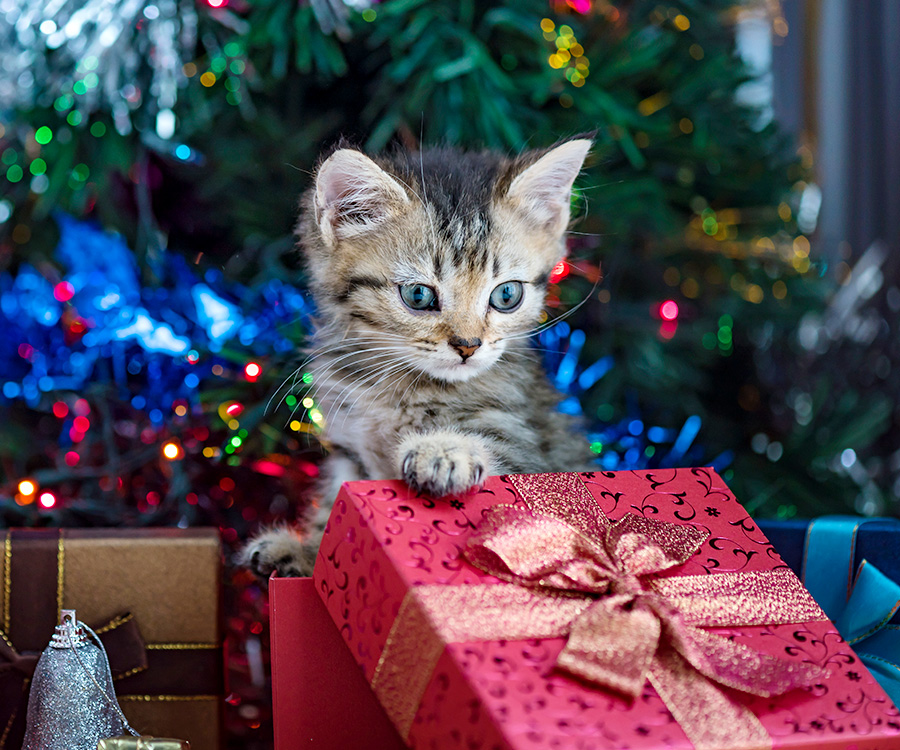
Twinkling lights, crinkly gift wrap, and the smell of fresh pine make Christmas magical for humans — and absolutely irresistible for cats. From a feline’s perspective, your decorated home is one big adventure playground packed with climbing spots, dangling toys, and bite-sized treasures. Unfortunately, many of these “toys” are actually holiday hazards that can put your cat’s health and safety at risk. With a little planning, you can keep the Christmas spirit alive while creating a safe, cat-friendly home all season long.
Christmas Trees and Cat Safety
Whether you choose a real or artificial tree, your Christmas tree is often the biggest cat safety challenge in the house. The sparkling branches invite climbing, pawing, and chewing — exactly what you don’t want around fragile ornaments and electrical cords.
Real vs. Artificial Trees
Both real and artificial trees come with their own set of safety considerations, so go with whatever you’re most comfortable with — just plan accordingly.
- Real trees: Pine and fir needles can irritate your cat’s mouth and digestive tract if swallowed. Never add chemicals to the tree water, as cats will drink from the stand. Keep the water plain and cover the stand securely.
- Artificial trees: Still a temptation for climbing and chewing. Loose plastic needles and small decorations can become choking hazards if ingested.
Tree-Proofing Tips
- Leave the tree bare for at least three days before decorating. This gives your cat time to investigate and lose interest before ornaments and lights enter the picture. Keep an eye out for nibbling during this period — if they’re chewing at the tree itself, remove it immediately.
- Anchor the tree to the wall or ceiling so an enthusiastic climber can’t tip it over.
- Place the tree away from sofas, shelves, or other surfaces that give your cat an easy jumping path into the branches.
- If your cat climbs the tree, try to ignore it. Cats that don’t get a reaction tend to get bored and move on once they’ve thoroughly investigated.
Holiday Decorations That Can Harm Cats
Many classic decorations are risky for curious cats, especially those who love to chase, chew, or bat at anything that moves. When in doubt, choose sturdy, shatter-resistant, and non-toxic options.
Ornaments and Garlands
- Use wooden and fabric ornaments on the lower branches so cats can safely bat at them without risk.
- Hang breakable ornaments up high where they’re less likely to get knocked down — or display special pieces in a closed cabinet to protect them.
- Choose wooden garlands over tinsel or metallic garlands. Tinsel is extremely dangerous when ingested, causing intestinal blockages that can require emergency surgery.
- Never use artificial snow on your tree — it is extremely toxic to cats. Candles on the tree are also a definite no. Flames are very hard for cats to resist, and the results can be serious for both your cat and your home.
Lights and Electrical Cords
- Put lights up and turn them on in the evenings so your cat can get used to them gradually.
- Apply bitter apple to cords when they’re plugged in — this deters curious kittens from chewing wires quickly.
- Use cord covers or secure cables along baseboards to reduce temptation.
- Turn lights off when you’re not home or not in the room — both to reduce fire risk and to protect your cat.
- Check regularly for frayed wires or loose bulbs, especially if your cat likes to play under the tree.
Ribbons, Bows, and Gift Wrap
Ribbons and bows should never be left under the tree unsupervised — they’re irresistible to cats and dangerous if swallowed. Keep wrapped gifts in a closet until guests arrive or it’s time to open them.
Toxic Holiday Plants
Festive greenery is beautiful, but some traditional Christmas plants can make cats very sick. Always check whether a plant is safe before bringing it into your home, and keep any questionable greenery well out of reach.
Plants to avoid around cats:
- Poinsettias: Mildly irritating to the mouth and stomach.
- Mistletoe: Can cause vomiting, diarrhea, and more serious symptoms.
- Holly: Berries and leaves may lead to digestive upset and discomfort.
- Lilies: Extremely dangerous — even tiny amounts of pollen or a single bite of a leaf can be life-threatening for cats.
If you feel you need plants to make your holiday complete, consider faux greenery, silk arrangements, or pet-safe plants placed well out of reach of curious paws. You can still enjoy a festive look without compromising your cat’s safety. For a broader guide to plants that may pose a risk, check out our guide on identifying potentially poisonous plants.
Holiday Foods to Keep Away From Cats
As you enjoy holiday meals and treats, keep in mind that many popular holiday foods are unsafe for cats. Keep plates out of reach and dispose of leftovers and bones promptly. Foods to avoid include:
- Chocolate and sweets, especially those containing xylitol
- Onions, garlic, leeks, and chives — commonly found in gravies and stuffing
- Turkey skin, fatty scraps, and bones that can splinter and become lodged in the throat or puncture the stomach
- Alcoholic drinks or foods cooked with alcohol
- Grapes, raisins, and rich desserts that upset sensitive stomachs
- Anything wrapped in aluminum foil — doubly dangerous if ingested alongside food scraps
Make sure your trash can isn’t easily accessible during the holidays. If you want your cat to share in the celebration, offer a small amount of their regular cat food or a vet-approved treat instead of table scraps.
Managing Guests and Gatherings
Holiday gatherings can be stressful for even the most social cats. Extra noise, unfamiliar faces, and changes to their routine may cause anxiety or hiding behavior — especially in shy or sensitive cats.
- Set up a quiet room with your cat’s bed, litter box, water, and favorite toys before guests arrive.
- Let your cat decide whether to greet visitors or retreat to their safe space. Never force interactions.
- Remind guests, especially children, to approach gently and respect your cat’s body language.
- Cats are like people — some are gregarious and friendly, others suspicious, and others shy. Be aware of your cat’s personality and give them the option to mingle or step away on their own terms.
Toy Safety
When buying your cat holiday toys, check them carefully before handing them over. Nothing should be glued on that your cat could pull off and swallow, and any toy small enough for your cat to ingest should stay out of reach. When in doubt, opt for something larger and sturdier.
A Note on Kittens as Christmas Gifts
Gifting a kitten on Christmas morning may look heartwarming in the movies, but in real life it can set both families and cats up for unnecessary stress. The noise, travel, and distractions of the holidays make it hard to give a new pet what they truly need — routine, stability, and patient, focused attention.
If you’re considering adding a cat to your family, use the holidays to talk, research, and prepare together. Then plan to bring your new family member home when things have settled down, schedules are predictable, and everyone is genuinely ready to commit to long-term care. And if you do bring a kitten home during the holidays, give the baby their own quiet room with plenty of food, fresh water, and alone time. A new kitten has just lost their mother and siblings — the kindest thing you can do is make their transition as calm and gentle as possible.
The Best Gift You Can Give Your Cat This Christmas
The best Christmas gift you can give your cat is a secure, peaceful environment where they can enjoy the season without danger. By choosing pet-safe decorations, keeping toxic plants and foods out of reach, and giving your cat a quiet retreat from the holiday hustle, you’ll protect their health while still enjoying every festive moment.
With a few thoughtful changes and a focus on holiday safety, you and your feline friend can share all the warmth of the season — without any emergency vet visits under the tree.