Written by Rene Knapp, long time TICA member and dedicated cat lover.
The Rise of Cat Travel
More cat owners are bringing their pets along on road trips, flights, and even camping adventures. But traveling with a cat isn’t as simple as packing a bag — it requires preparation, the right gear, and a genuine understanding of feline comfort and safety. Here’s how to do it well.
Preparing for Travel with Your Cat
Choose the Right Carrier
Select a sturdy, well-ventilated carrier that gives your cat enough room to stand up, turn around, and lie down comfortably. Soft-sided carriers are ideal for air travel, while hard-sided carriers tend to work better in cars.
Don’t wait until travel day to introduce the carrier. Leave it open in your home well in advance with comfortable bedding and treats inside. Encourage your cat to enter voluntarily and associate it with positive experiences — the more familiar it feels before the trip, the calmer your cat will be during it.
Visit the Vet Beforehand
Schedule a veterinary visit before any trip to confirm your cat is healthy enough to travel. Use this appointment to:
- Get vaccinations and parasite prevention up to date
- Obtain any necessary documentation such as a health certificate
- Ask about sedatives or calming supplements if your cat is prone to anxiety
- Discuss motion sickness — if your cat is susceptible, your vet can recommend medications or supplements to help. Avoid feeding a large meal before travel to reduce the risk of nausea.
Update Your Cat’s Identification
Make sure your cat’s microchip information and ID tags are current before you leave. Consider attaching a temporary travel tag to the carrier with your contact details in case of an emergency on the road.
Practice Makes Perfect
If your cat is new to car travel, don’t make their first trip a long one. Take short practice drives around the neighborhood first, then gradually increase the duration and distance. This helps your cat acclimate to the motion, sounds, and sensation of being in a moving vehicle before the real journey begins.
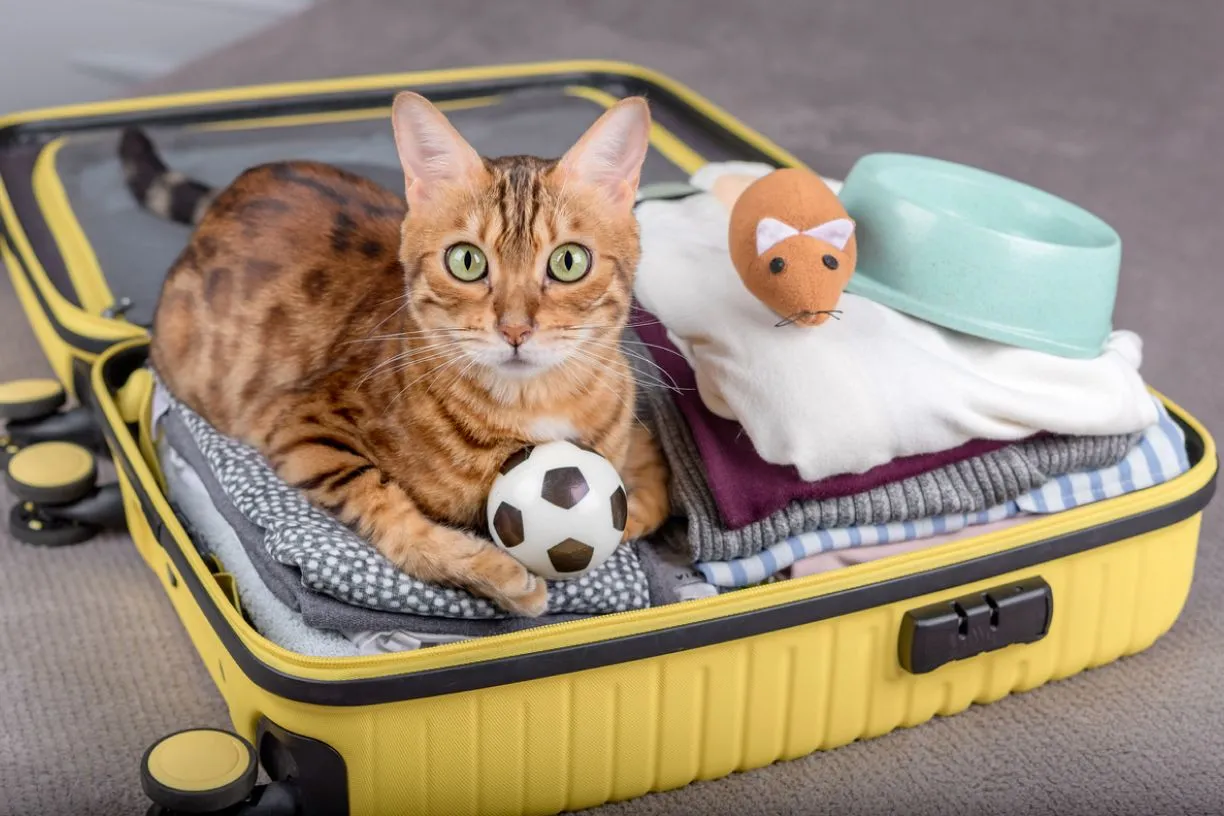
Pack Essentials
- Food and water
- Litter and a travel-friendly disposable litter box
- Leash and harness for breaks
- Toys and comfort items — familiar smells go a long way
- Medications and medical records
- Health certificate if required for your destination
During the Trip
Keep Calm and Comfortable
Use pheromone sprays or calming collars to help ease anxiety. Keep noise low, speak to your cat in soothing tones, and partially cover the carrier to reduce visual stimuli. Your calm energy matters too — cats pick up on stress, so the more relaxed you are, the more relaxed they’ll be.
Maintain a Routine
Feed and play at regular times as much as possible. Offering familiar smells, sounds, and objects helps reduce stress in unfamiliar environments and gives your cat a sense of continuity even when everything else has changed.
Plan for Breaks
On longer trips, plan regular stops to let your cat stretch, use the litter box, and get some fresh air. Always keep your cat on a leash and harness during breaks — even the calmest cat can bolt in an unfamiliar place.
Finding Pet-Friendly Stops
Research hotels, rest stops, and activities that welcome pets before you leave. Look for places with green space, low noise levels, and pet-specific amenities so your cat has a comfortable place to land at the end of each day.