Have you ever looked at your cat curled up on the couch and wondered about the science behind their appearance? What exactly decides the pattern of their coat, the unique color of their eyes, or the texture of their fur? While cat genetics can often seem like a complex biological labyrinth, it is actually a fascinating natural puzzle. You don’t need a PhD to understand it—in fact, you look at the beautiful results of genetics every single day.
At its core, cat genetics is the study of how hereditary traits are passed from one generation to the next. Inside every domestic cat, nature writes these secret instructions using 38 chromosomes, arranged in 19 pairs (18 pairs of autosomes and one pair of sex chromosomes—XX for females and XY for males).
To truly understand how this system runs and why our cats look the way they do, we can look at it as a master digital blueprint or a software code, following three precise steps:
Step 1: The Building Blocks (Genes and Alleles)
Before nature can display anything on the outside, it needs the basic software components:
• What is a Gene? A gene is a specific segment of DNA located on a chromosome that dictates a single trait, such as Coat Length, Eye Color, or Body Structure. Every cat has the exact same set of genes (the same basic folders in the system).
• What is an Allele? An allele is a variant form of a gene—think of it as a different option within that folder. For the Coat Length gene, nature can input a “Short Hair” allele, a “Long Hair” allele. For every single gene, a cat inherits exactly two alleles—one from the mother and one from the father.
Step 2: The Rules of Interaction (Dominant, Recessive, and Incomplete Dominance)
When a kitten inherits these two alleles, they don’t always carry the same weight. The software resolves different options using strict rules:
• Dominant Alleles: These are the strong, overriding options in the code. If a cat has even one copy of a dominant allele, it will completely mask the other option and dictate how the trait looks.
• Recessive Alleles: These are the quiet, hidden options. They will be completely hidden by a dominant allele. A recessive trait can only show up if the cat inherits two identical copies of that recessive allele—one from each parent.
• Incomplete Dominant Alleles: In some beautiful cases, neither allele completely masks the other. Instead, they compromise and blend together, creating a distinct third, intermediate appearance that is a perfect middle-ground.
A flawless example of Incomplete Dominance is the famous Mink coat pattern found in the Tonkinese breed, which happens at the C Locus (the color folder):
• The Burmese (sepia) allele (cb/cb) codes for a rich, warm body color with darker points.
• The Siamese (pointed) allele (cs/cs) codes for a light body with sharply contrasting dark points.
• When they meet, neither wins. They blend perfectly to create the gorgeous Mink pattern (cb/cs)—a beautiful combination featuring soft contrast and unique aqua or blue-green eyes.
A Mind-Blowing Fact: Because nature’s programming is so precise, if you breed a pure Burmese cat (cb/cb) with a pure Siamese cat (cs/cs), 100% of the kittens will be Mink. They simply cannot inherit any other combination!
Step 3: The Final Result (Genotype vs. Phenotype)
Once the alleles are inherited and the rules of interaction are applied, nature delivers the final double-layered result:
• What is the Genotype? This is the hidden internal code. It represents the exact combination of alleles locked inside the cat’s DNA, completely invisible from the outside. For example, a sleek, short-haired cat might secretly carry a hidden recessive allele for long hair in its genotype.
• What is the Phenotype? This is the final result on your screen! It is the actual physical expression of that internal code—the real coat color, pattern, striking eye color, and unique structural features you see when you look at your cat.
TRUSTED
by
Vets
Now that we know how nature’s software works, we can start decoding the fascinating mysteries we see in real life. When you apply these rules of genes, alleles, and dominance, some of the most surprising cat features suddenly make perfect sense!
Here are four mind-blowing genetic facts that prove just how fun and unpredictable this natural code can be:
1. The Short-Haired Surprise
Have you ever seen two sleek, short-haired cats suddenly have a long-haired kitten in their litter? It looks like a mistake, but it is pure genetics! The allele for short hair is dominant (the loud boss), while the allele for long hair is recessive (hidden in the code). If both short-haired parents secretly carry that hidden long-hair allele in their genotype, they can both pass it down to a kitten. When those two recessive alleles meet, boom—you get a long-haired beauty!
The Golden Rule: Because long-haired cats only have recessive alleles, two long-haired cats can never produce a short-haired kitten. They simply do not have the “short-hair” code to pass on!
2. The Ginger Boys Club
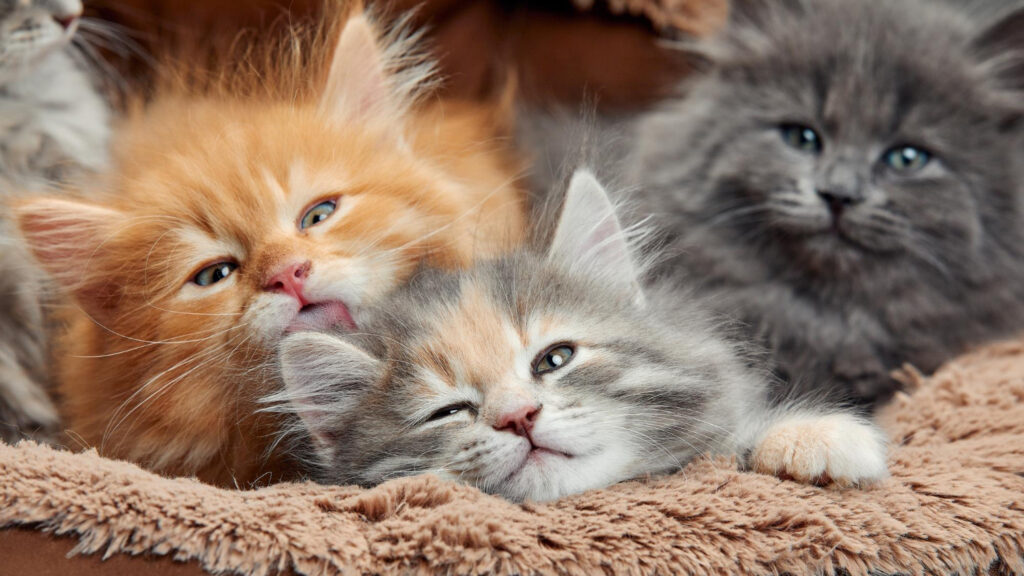
If you pass by a bright orange (ginger) cat on the street, you can confidently guess its gender: there is an 80% chance it is a male! This happens because the gene responsible for the orange color is located strictly on the X chromosome. Since male cats only have one X chromosome (XY), they only need one copy of the orange allele from their mother to turn completely ginger. Female cats have two X chromosomes (XX), meaning they need two copies—one from each parent—to be fully orange. This makes orange girls much rarer!
3. The Tortie Rule (and the 1-in-3,000 Miracle)
What happens if a female cat gets an orange allele on one X chromosome and a black allele on the other? Because of how the code resolves, she becomes a beautiful Tortoiseshell (Tortie). Because this requires two X chromosomes, 99.9% of Tortie cats are female.
• Genetic Exception: Can a male tortoiseshell cat exist? Yes, but it’s an absolute miracle (about 1 in 10,000). For a male cat to have both black and red (orange) pigment, he must be born with a rare genetic condition called Klinefelter syndrome, meaning he has an extra chromosome (XXY). These cats are the “unicorns” of the feline world, and because of this extra chromosome, they are almost always sterile (99.9%).
4. The Silver Illusion (The Inhibitor Gene)
Have you ever seen a gorgeous silver tabby or a smoke-colored cat and wondered how nature created that shimmering look? This stunning effect is controlled by a single dominant gene called the Inhibitor gene (I), or simply the Silver gene. In nature’s software, this gene acts like a color blocker—it physically suppresses (stops) the pigment from forming at the base of each individual hair shaft, leaving it a brilliant, icy white.
Because the Silver gene is strictly dominant, it follows a clear rule: a kitten can only be silver if at least one of its parents is silver!
• If a cat inherits even one copy of the silver code (I/i or I/I), it will display that beautiful silver or smoke look.
• The Heterozygous Twist: Interestingly, two silver cats can actually produce a non-silver kitten! If both silver parents are heterozygous (I/i), they both secretly carry the recessive non-silver allele (i). If a kitten inherits that hidden “i” from both the mother and the father, it will be born non-silver (i/i). On the other hand, two non-silver cats (i/i) can never produce a silver kitten, because they completely lack the dominant inhibitor code to pass down.
Conclusion
Of course, we have only just scratched the surface of the vast, magical world of feline genetics. Beyond colors and coat lengths, there are thousands of genetic combinations dictating everything from folded ears and extra toes (polydactyly) to the short tail of the Japanese Bobtail, or the dominant spontaneous mutation that resulted in the hairless Donskoy breed.
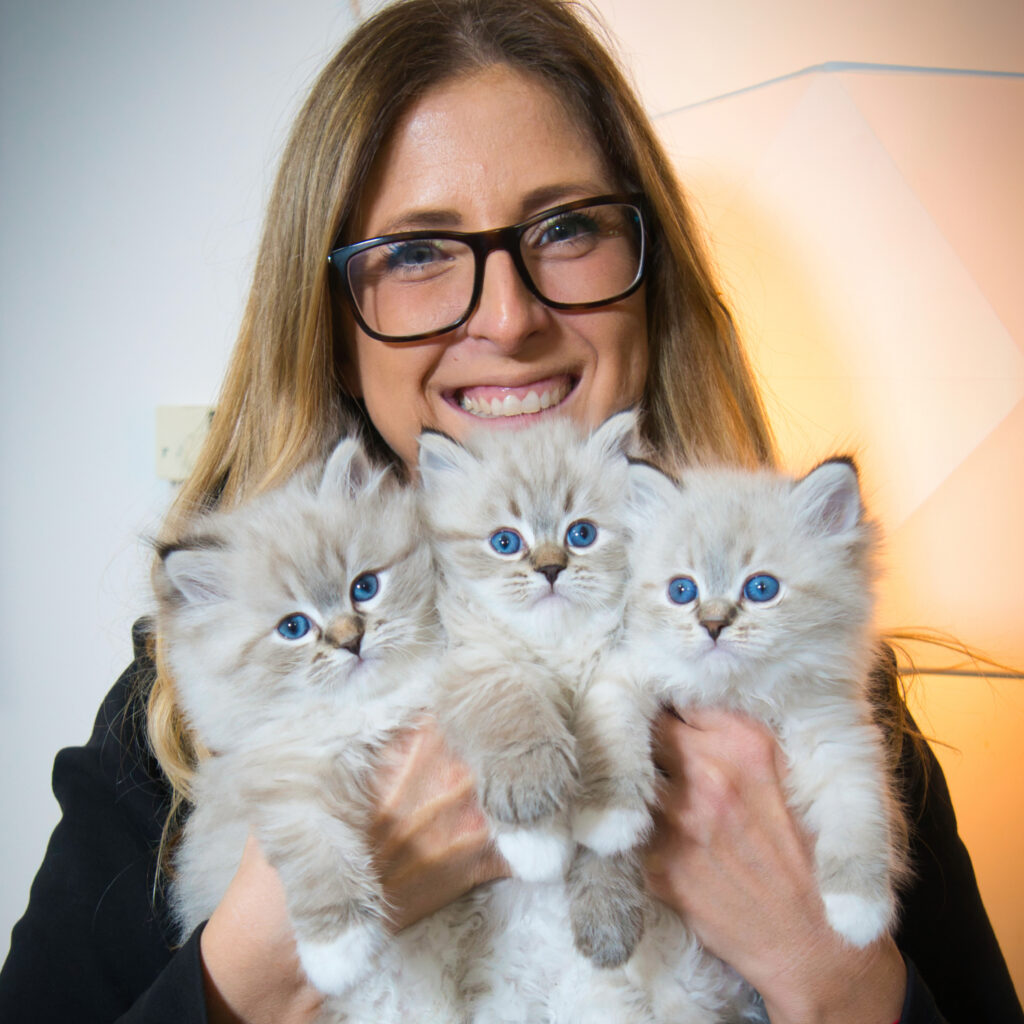
Author: Ana Vlahovic
Cat Breeder, Cat Nutritionist, TICA longtime member
Don’t forget to follow us!