Written by Rene Knapp, long time TICA member and dedicated cat lover.
Seeing the Holidays From Your Cat’s Point of View
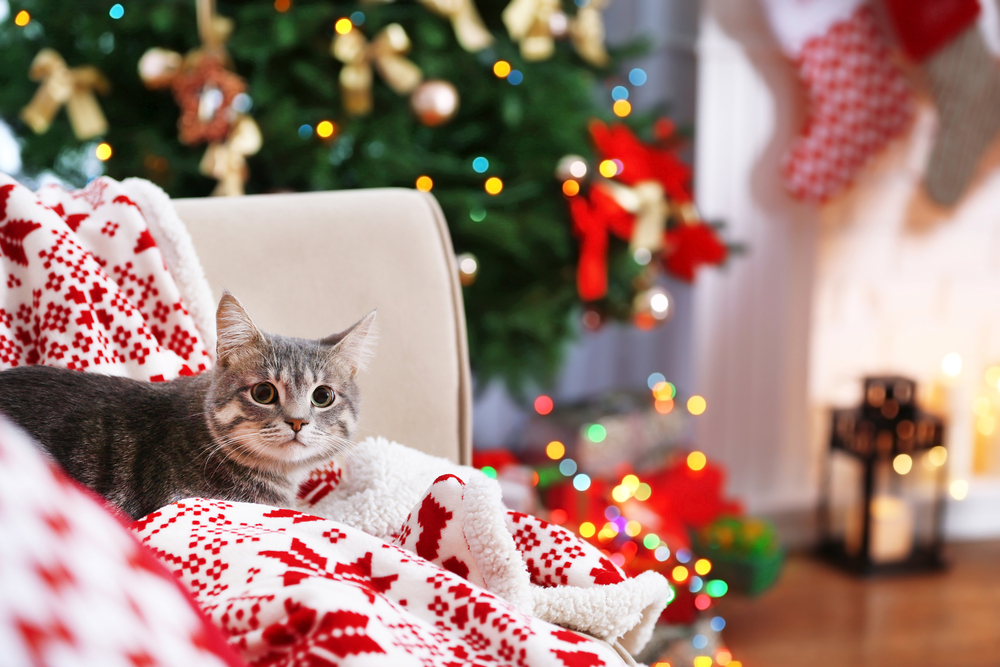
Christmas magical for humans—and absolutely irresistible for cats.
From a feline’s perspective, your decorated home is one big adventure
playground packed with climbing spots, dangling toys, and
bite-sized treasures.Unfortunately, many of these “toys” are actually holiday hazards that
can put your cat’s health and safety at risk. With a little planning,
you can keep the Christmas spirit alive while creating a safe,
cat-friendly home all season long.
Christmas Trees and Cat Safety
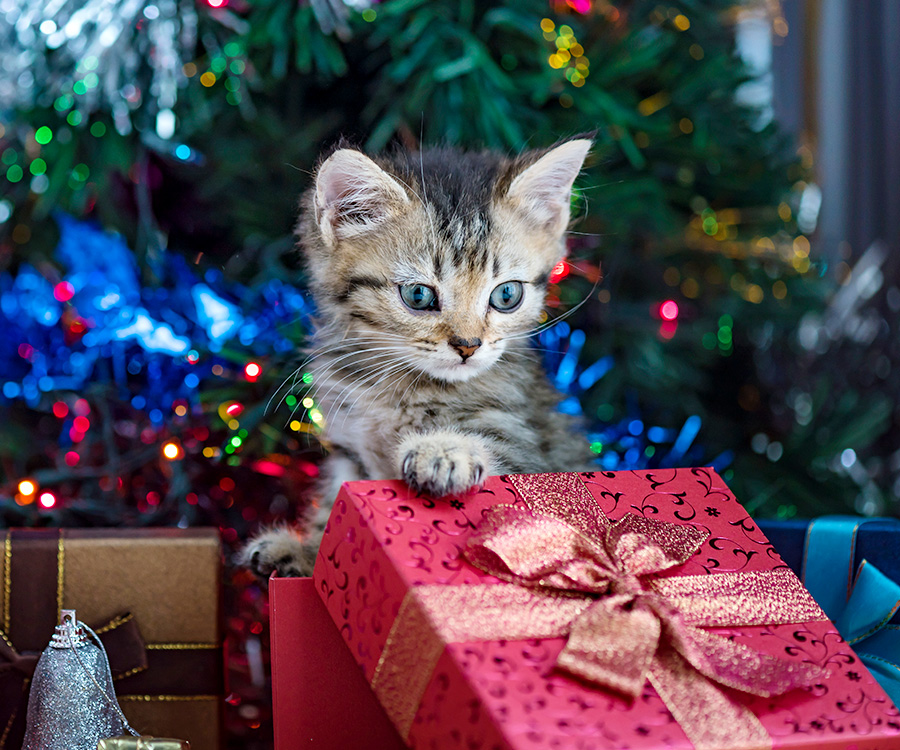
Whether you choose a real or artificial tree, your Christmas tree is
often the biggest Christmas cat safety challenge in the house. The
sparkling branches invite climbing, pawing, and chewing—exactly what
you don’t want around fragile ornaments and electrical cords.
Real vs. Artificial Trees
- Real trees: Sharpened pine or fir needles can
irritate your cat’s mouth and digestive tract if swallowed. Tree
water may contain fertilizers, sap, mold, or bacteria, so cover the
stand securely or use a pet-safe barrier. - Artificial trees: Safer in some ways, but still a
temptation for climbing and chewing. Loose plastic needles and small
decorations can become choking hazards if ingested.
Tree-Proofing Tips
- Anchor the tree to the wall or ceiling so an enthusiastic climber
can’t tip it over. - Place the tree away from shelves, sofas, or other “launch pads” that
give your cat an easy jumping path. - Keep the bottom branches less decorated and avoid fragile or
dangling items at nose level.
Holiday Decorations That Can Harm Cats
Many classic decorations are risky for curious cats, especially those
who love to chase, chew, or bat at anything that moves. When in doubt,
choose sturdy, shatter-resistant, and non-toxic options.
Ornaments, Ribbons, and Sparkly Strings
- Glass ornaments: If knocked to the floor, they can
shatter into sharp pieces that cut paws, noses, and mouths. Hang
breakables high or display them in a closed cabinet. - Ribbons, string, and bows: Long, stringy items are
particularly dangerous if swallowed, potentially causing serious
intestinal blockages that require emergency surgery. - Tinsel and metallic garlands: These glittery strips
are almost irresistible to cats but are extremely hazardous when
ingested. Swap them for felt, paper, or wooden garlands instead.
Lights and Electrical Cords
- Use cord covers or secure cables along baseboards so your cat is
less tempted to chew. - Turn lights off when you’re not home or not in the room—both to
reduce fire risks and to protect pets. - Check regularly for frayed wires or loose bulbs, especially if your
cat likes to play under the tree.
Toxic Holiday Plants for Cats
Festive greenery is beautiful, but some traditional Christmas plants
can make cats very sick. Always check whether a plant is safe before
bringing it into your home, and keep any questionable greenery well
out of reach.
Plants to Avoid Around Cats
- Poinsettias: Mildly irritating to mouths and stomachs.
- Mistletoe: Can cause vomiting, diarrhea, and more serious symptoms.
- Holly: Berries and leaves may lead to digestive upset and discomfort.
- Lilies: Extremely dangerous for cats—tiny amounts of
pollen or a single bite of a leaf can be life-threatening.
Cat-Safe Alternatives
Consider faux greenery, silk arrangements, or pet-safe plants placed
well away from curious paws. You can still enjoy a festive look
without compromising Christmas cat safety.
Guests, Gifts, and Festive Food
Holiday gatherings can be stressful for even the most social cats.
Extra noise, unfamiliar faces, and changes to their routine may cause
anxiety or hiding behavior—especially in shy or sensitive cats.
Creating a Safe Retreat
- Set up a quiet room with your cat’s bed, litter box, water, and
favorite toys before guests arrive. - Let your cat decide whether to greet visitors or stay in their safe
space; never force interactions. - Remind guests, especially children, to approach gently and respect
your cat’s body language.
Holiday Foods to Keep Away From Cats
Many popular holiday foods are unsafe for cats. Keep plates out of
reach and dispose of leftovers and bones promptly.
- Chocolate and sweets, especially those containing xylitol.
- Onions, garlic, leeks, and chives (in gravies and stuffing).
- Alcoholic drinks or foods cooked with alcohol.
- Turkey skin, fatty scraps, and bones that can splinter.
- Grapes, raisins, and rich desserts that upset sensitive stomachs.
If you want your cat to share in the celebration, offer a small
amount of their regular cat food or a vet-approved treat instead of
human table scraps.
Why Kittens Shouldn’t Be Christmas Morning Surprises
Gifting a kitten on Christmas morning may look heartwarming in movies,
but in real life it can set both families and cats up for stress.
The noise, travel, and distractions of the holidays make it hard to
focus on what a new pet truly needs—routine, stability, and patient
training.
If you’re considering adding a cat to your family, use the holidays to
talk, research, and prepare. Then plan to adopt when your home is
calm, schedules are predictable, and everyone is ready to commit to
long-term cat care.
Simple Steps for a Safer, Happier Holiday
The best Christmas gift you can give your cat is a secure, peaceful
environment where they can enjoy the season without danger. By
choosing pet-safe decorations, managing access to toxic plants and
foods, and giving your cat a quiet retreat from holiday hustle, you’ll
protect their health while still enjoying every festive moment.
With a few thoughtful changes and a focus on holiday cat safety, you
and your feline friend can share all the warmth of the season—without
any emergency vet visits under the tree.