Written by Rene Knapp, long time TICA member and dedicated cat lover.
Why Cat Dental Care Matters
Plaque forms within hours after eating and can mineralize into tartar, irritating the gums and setting the stage for gingivitis and periodontitis. Cats are masters at hiding pain, which means dental disease can progress significantly before you notice anything is wrong. Proactive oral care — at home and at the vet — is the most effective way to stay ahead of it.
According to the 2019 AAHA Dental Care Guidelines for Dogs and Cats, preventive oral healthcare is the single most important factor in combating periodontal disease, the most common — and most preventable — disease affecting cats.
Signs of Dental Problems
Because cats rarely show obvious signs of oral pain, knowing what to watch for is essential. Common signs of dental disease include:
- Bad breath, drooling, or pawing at the mouth
- Red, swollen, or bleeding gums
- Tooth discoloration or visible tartar buildup
- Preference for soft food, chewing on one side, or dropping kibble
- Difficulty eating or reluctance to eat hard food
- Noticeable weight loss
- Behavior changes such as hiding, irritability, or reduced grooming
If you notice any of these signs, schedule a veterinary exam promptly. Early detection prevents dental issues from escalating into more serious — and more costly — conditions.
How to Brush Your Cat’s Teeth: A Step-by-Step Guide
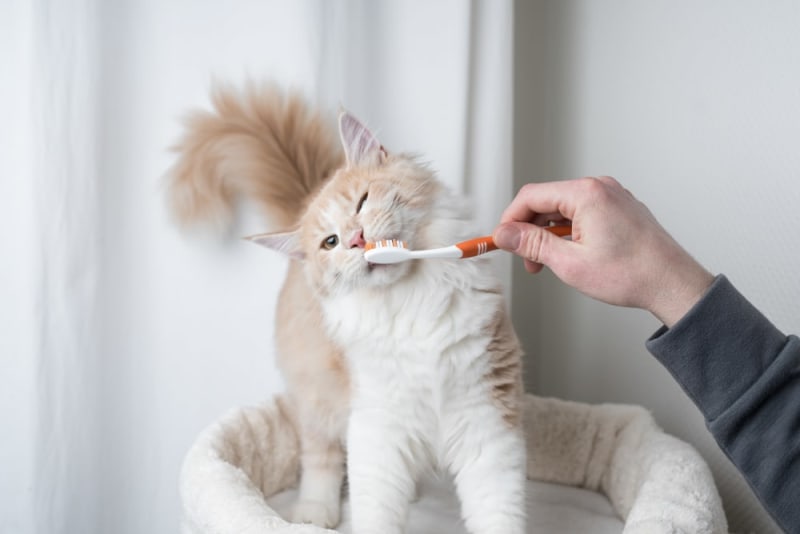
Brushing is the gold standard of at-home cat dental care. Done consistently, it’s the single most effective way to reduce plaque and prevent periodontal disease. Here’s how to do it well.
1) Gather the Right Supplies
- A soft-bristled toothbrush or finger brush designed specifically for cats
- Enzymatic cat toothpaste in a flavor your cat enjoys — poultry and seafood flavors tend to be popular
- Treats to reward calm, cooperative behavior
Never use human toothpaste. Ingredients like xylitol and high fluoride levels can be harmful to cats.
2) Build Positive Associations
Before introducing the toothbrush, get your cat comfortable with having their mouth touched. Start by:
- Gently lifting your cat’s lips and massaging their gums with your finger for a few days.
- Letting your cat lick a small dab of toothpaste from your finger so they associate it with something positive.
- Allowing your cat to sniff and explore the toothbrush before it comes anywhere near their mouth.
Keep every session short, calm, and upbeat. Never force the process — slow and steady builds the trust that makes brushing sustainable long-term.
3) Introduce the Brush
Once your cat is comfortable with mouth handling, it’s time to introduce the brush:
- Touch the toothbrush gently to your cat’s teeth and gums without applying pressure at first, just to get them used to the sensation.
- Gradually work up to short brushing sessions, increasing the duration as your cat becomes more comfortable.
- Choose a time when your cat is relaxed — after a meal or a play session works well.
Step 4: Brush Using the Right Technique
- Lift your cat’s lips and angle the bristles toward the gumline.
- Use small, gentle circular motions, focusing on the outer surfaces of the teeth — especially the back molars, where plaque accumulates most.
- You don’t need to brush the inner surfaces; the tongue does a reasonable job there.
- Aim for daily brushing. If that’s not possible, several times per week still provides meaningful benefits.
Helpful Dental Products (Vet-Recommended Categories)
Brushing is the foundation, but other products can complement your routine. Look for items evaluated by the Veterinary Oral Health Council (VOHC), which tests and approves products that meet standards for reducing plaque and tartar.
- Dental treats and chews: Chewing helps reduce plaque. Look for VOHC-approved options.
- Dental diets: Foods like Hill’s Science Diet Oral Care and Royal Canin Dental Care are specifically formulated to support oral health.
- Water additives and gels: Use only cat-specific formulas. Avoid anything containing xylitol or essential oils not labeled safe for cats.
These products are a helpful supplement — but they don’t replace brushing.
Veterinary Dental Care: Exams, X-rays, and Cleanings
Even with excellent home care, most cats benefit from periodic professional cleanings under anesthesia. Your veterinarian will tailor the schedule to your cat’s age, exam findings, and dental X-rays. Here’s what to expect:
- Before the procedure: Discuss bloodwork, anesthesia protocols, pain control, and dental radiographs with your vet.
- After the procedure: Follow all home-care instructions carefully to maintain results and slow the return of plaque buildup.
Regular veterinary check-ups are also your best opportunity for early detection. Many dental issues are identified during routine exams before they become serious.
Cat Dental Care FAQs
How often should I brush my cat’s teeth?
Daily is best. Several times per week still provides meaningful benefits if daily brushing isn’t possible.
What if my cat won’t tolerate brushing?
Use the gradual training approach outlined above, try a finger brush instead of a toothbrush, and ask your vet about VOHC-approved adjunct products. Never force it — build up slowly and keep the experience positive.
Is bad breath normal in cats?
Persistent bad breath is often a sign of dental disease rather than a normal quirk. Schedule a veterinary exam to rule out oral or systemic causes.
What if my cat needs dental treatment?
Consider adding TICA Pet Insurance to your pet healthcare strategy. If your cat needs tooth extractions or other dental treatment, you can receive care from any vet and have these services covered. Get your quote today.